

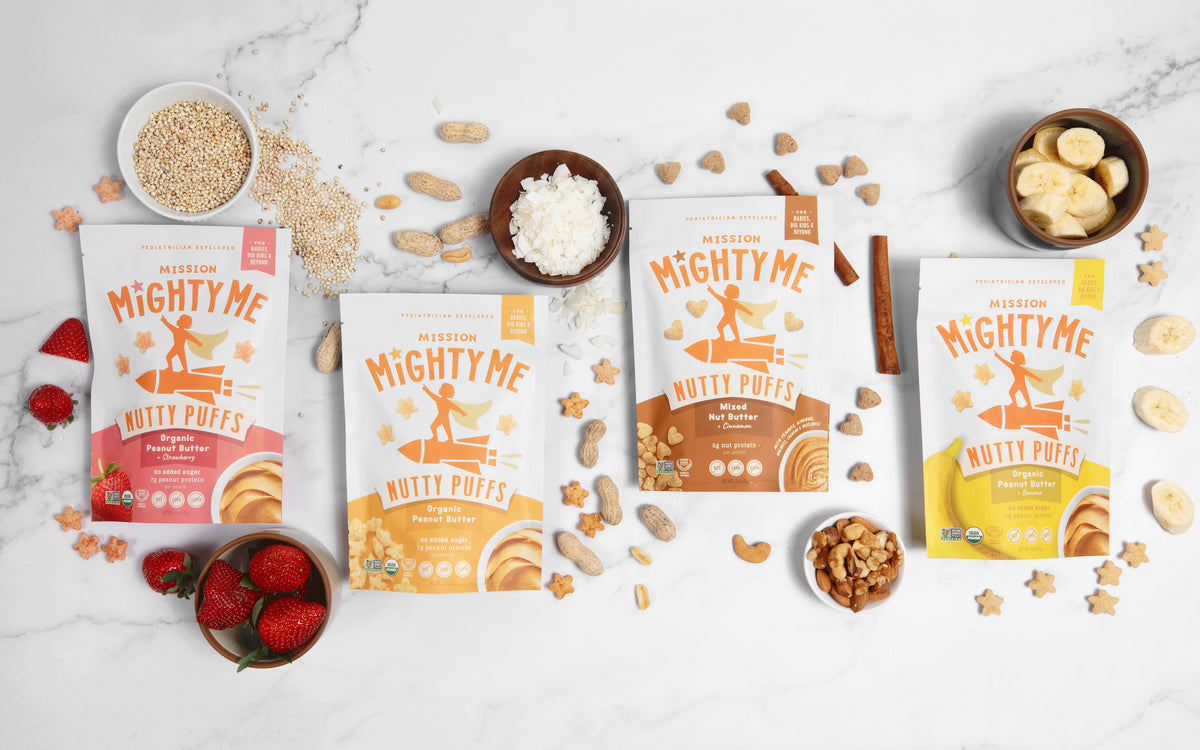
Nutty Puffs

- More than 50% nuts
- Plant-based protein
- All-natural ingredients
- No added sugar
- Early allergen exposure
All your favorites. One mighty box
5-PACK


Nutty Puffs: For babies starting solids and up, our versatile, quick-dissolve puffs can be softened with water, breast milk or formula (recommended for 7 months and younger), crumbled into purees or eaten on-the-go.
The possibilities for incorporating our puffs in little diets are endless: add to oatmeal, smoothies, granola bars and more.
Nutty Trail Mix: Your child may be ready for Nutty Trail Mix when they use fingers to self-feed, use jaws to chew solid foods, sits up independently and babbles or begins to form words. Every child develops at their own pace. When in doubt, consult your pediatrician with any feeding questions.
Looking for more flavors or pack sizes? Shop the full MightyMe collection to find the mix that works for your family.



Pediatrician-Developed

Puffs are more than 50% nuts

Clean Label Project Certified

No rice, corn, or gluten


Yes. There have been many studies on early peanut introduction. The most well-known is the LEAP Study (Learning Early About Peanut Allergy) by our co-founder Dr. Gideon Lack. This landmark clinical trial found that consistently including peanut protein in babies' diets from as early as 4-11 months until age 5, reduced the likelihood of developing a peanut allergy by up to 86 percent, and that the protective effects last well into the teen years. A separate study by Dr. Lack, the EAT Study, found that the early introduction of other allergenic foods as early as 3 months, alongside breastfeeding, was safe and demonstrated a 67% reduction in egg allergy and a 100% reduction in peanut allergy in children who consumed sufficient amounts of these foods (at least 2g per week).*
Based on the findings of the LEAP Study, the National Institutes of Health (2017) and The American Academy of Pediatrics (2019) released new clinical guidelines encouraging parents to introduce baby-friendly peanut foods in infancy, depending on each child’s risk factor for allergies. Japan, Canada, Australia and the UK have also introduced similar guidelines based on the LEAP Study results. The 2020-2025 USDA Dietary Guidelines for Americans also support the concept of introducing common food allergens once babies start solids, and keeping them in the diet regularly. In 2020, the leading allergy organizations in the US and Canada also released a consensus statement recommending that all infants start allergenic foods, especially peanut and egg, around 6 months and keep them in the diet regularly once introduced. Read more about the guidelines in our Learning Center.
This depends on your baby’s individual development, but most babies are ready for solids between 4-6 months. Some signs your baby may be ready include being able to control the head and neck, sitting up with or without support, showing an interest in food and reaching for it, bringing objects to the mouth and losing the tongue reflex that pushes food out of the mouth.
Most babies can start peanut foods and other common food allergens around 6 months, after starting other solid foods. The American Academy of Pediatrics recommends high-risk babies (with severe eczema and/or egg allergy) start peanut foods even earlier (between 4-6 months) but only after evaluation by a doctor and possible allergy testing.* Read the NIAID guidelines for more information.
This depends on a baby’s individual development, but most babies can eat puffs starting around 6 months if they are developmentally ready for solids.
Most babies can have Nutty Puffs around 6 months of age depending on their individual development. For babies under 7 months of age, Nutty Puffs can be softened with water or breast milk or crumbled and mixed into purees.
Start conversations with your pediatrician early at the 2 or 3 months check-up so you have a game plan ready when your baby is 4-6 months. Start with a small amount of either diluted nut butter, finely ground nuts mixed into puree, or Nutty Puffs. Once introduced successfully, keep nuts in the diet regularly - Nutty Puffs make that easy and enjoyable! Check out our early allergen introduction guide for more tips.


